Regenerative Residences
n.A home that gives back more than it takes — to the land it stands on, the hands that made it, and the life lived inside it.
Three commitments, and the proof
Scroll ↓
“A commitment you can't be audited on is advertising.”
Our industry has a language problem. Words like sustainable, conscious, and responsible have been used so freely, and proven so rarely, that a client can no longer tell a standard from a slogan. We'd rather be held to something.
So this page is written as a ledger. Each commitment is stated plainly, in language we'd be comfortable defending to someone who came looking for the receipts — and each one names the work that proves it. Where the proof isn't public yet, we say so. And at the bottom, we've listed the commitments we haven't earned the right to make, because a page that claims everything proves nothing.
The greenest room is the one you never have to replace.
Sustainability in interiors is mostly a sourcing problem — so that's where we solve it.
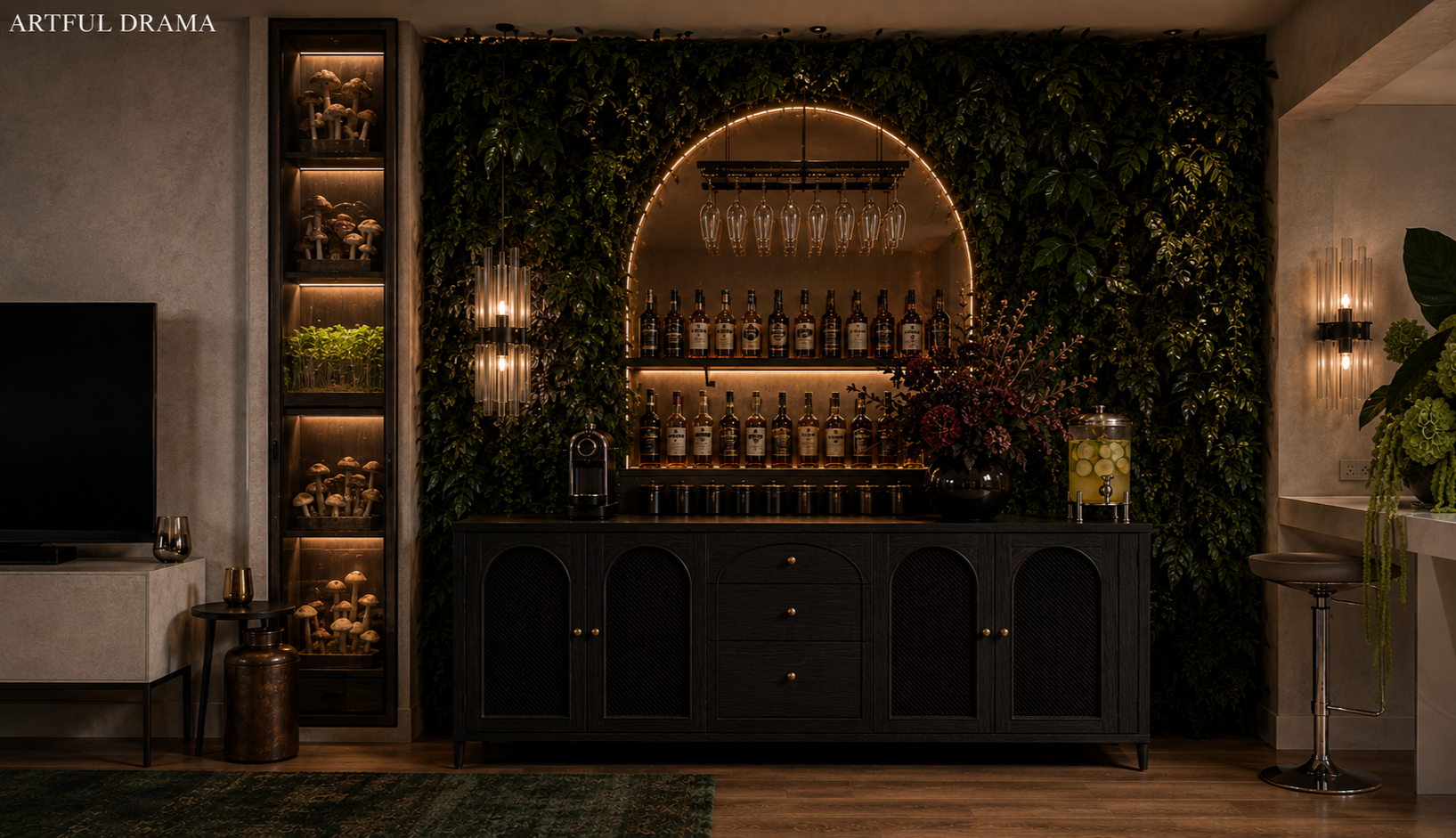
Not with a recycled-material footnote at the end of a specification, but at the beginning: materials chosen to age into character rather than out of style, makers we can name, and a plan for where every piece goes after we leave it. A room designed to be replaced in four years is an environmental decision, whatever it's made of.
We build much of our furniture ourselves. That isn't romance about craft — it's accountability. When you make the thing, you know exactly what's inside it, where it came from, and what it cost the world to exist. It keeps our sourcing honest in a way a supplier's certificate cannot.
It's also why so much of our work is reversible. Designing for leased and rented homes means designing without demolition — no gutted kitchens, no landfill, nothing that can't be undone when a life changes. The most sustainable interior is one that adapts instead of one that gets torn out.
Recycled plastics from the countries who need it most — remade into surfaces, joinery, and furniture.
Design that improves only the room it's in isn't finished thinking.
Our work runs on two hemispheres — and each one is meant to hold the other up.
Editorial homes in New York. Regenerative development in Trinidad, where our founder's family is from. They are not a business and a side project; they're the same practice at two scales, and the second is the reason the first has a horizon longer than a season.
Sprout Village is the clearest expression of it — building on land in a way that leaves the place measurably better than we found it, with local hands, local materials, and decisions made in the open with the people who live there. It's slower. It costs more up front. It's also the only version of development we're interested in doing.
The connection back to the interiors isn't sentimental. A studio that sources from the Caribbean, builds in the Caribbean, and returns value to the Caribbean has a different relationship to the region than one that borrows its palette. We'd like ours to be the first kind.
A regenerative village in Trinidad — built with local hands, on land it is designed to restore.
Representation has to show up in the supply chain, not the marketing.
Editorial design has been a narrow room for a long time. We'd rather widen it than describe it.
This studio is founder-led, of Trinidadian heritage, and openly so. That isn't a biography detail we've decided to feature; it shapes who we hire, who we buy from, whose homes we're curious about, and which references we treat as canonical in the first place.
The practical version is unglamorous and it lives in the purchase order. We work deliberately with makers, fabricators, and vendors from the Caribbean and the diaspora — because a values statement that never reaches the invoice is a decoration. Money is the part of a commitment that can't be written well.
And we design for people the industry has been slow to picture in an aspirational room. That, more than anything on this page, is the work: not adding a wider audience to a fixed idea of beautiful, but letting a wider audience change what beautiful is allowed to look like.
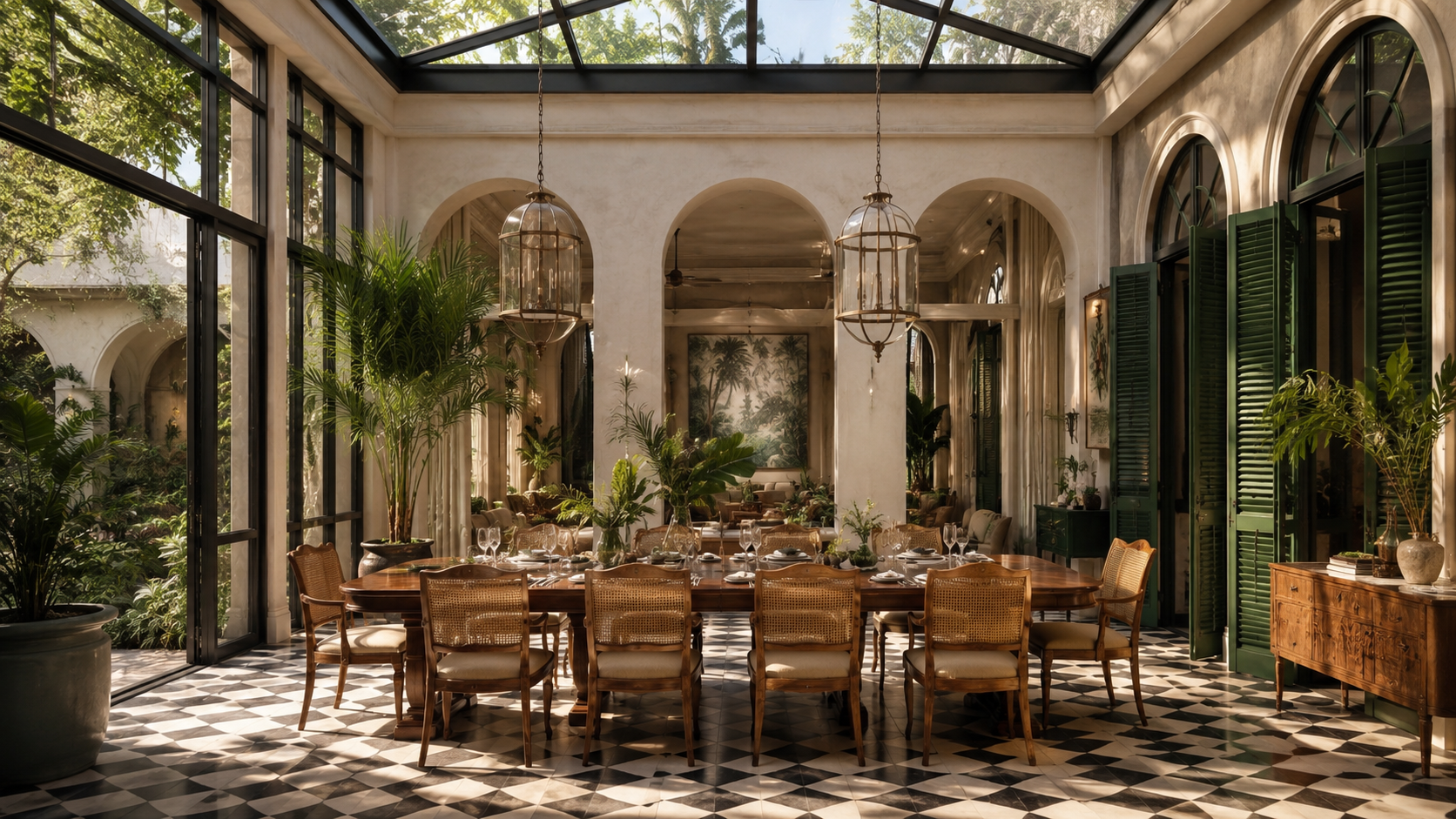
Caribbean materials, Caribbean hands — the surfaces, joinery, and furniture behind the work.
What we haven't
earned yet.
Most companies claim every commitment on the list. We think that's exactly why nobody believes any of them — so here are the two we're not claiming, and what would have to be true for us to.
Career growth & learning
We believe in the apprenticeship model — our founder came up through it, in kitchens where you learned by standing next to someone better than you. Everything here is taught by doing: sourcing, fabrication, installation, and the reasoning behind each decision.
But we are, today, one designer and the makers we work alongside. Until there's a person on the other side of that promise, it would be a philosophy wearing a commitment's clothes.
Claimed when we hireWork–life balance
We take a small number of projects at a time, on purpose. Fine dining taught our founder exactly what an unsustainable pace costs, and what it takes from the work — and this studio is deliberately built not to repeat it.
That's a business model and a personal discipline. It isn't yet an employment practice, and we won't advertise it as one until someone other than the founder is living under it.
Claimed when we hire